Newsletter Subscribe
Enter your email address below and subscribe to our newsletter

Enter your email address below and subscribe to our newsletter
All voices matter
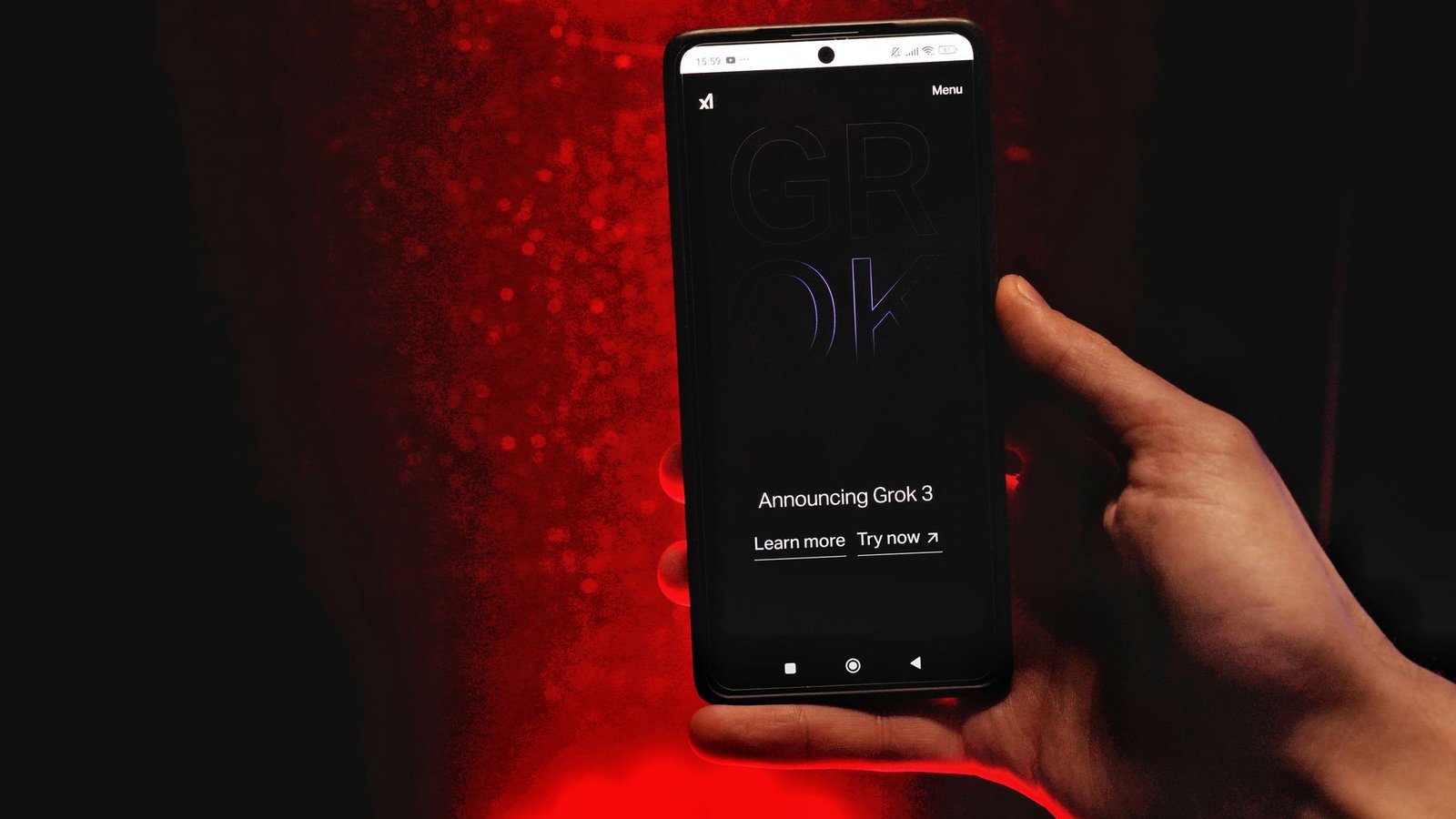
xAI's Grok 2 open-weights LLM release challenges OpenAI & Anthropic with commercial use license. Learn about its performance, licensing, and market impact.
This article contains affiliate links. We may earn a commission at no extra cost to you. Full disclosure.
8 min read
Grok 2’s release, particularly with its open-weights model, presents a significant challenge to the established dominance of closed, proprietary Large Language Models (LLMs). While OpenAI’s GPT series and Anthropic’s Claude have commanded attention and market share through their advanced capabilities and carefully guarded architectures, xAI’s approach with Grok 2 signals a potential shift. The model’s availability under a permissive license, allowing for commercial use, directly confronts the high pricing and restricted access models that have become the norm. This move isn’t just about releasing another powerful LLM; it’s a strategic play to democratize access to cutting-edge AI, potentially reshaping how businesses and developers integrate AI into their products and services, and forcing a re-evaluation of the economic models underpinning LLM development and deployment.
## The “Open” Weights Debate: What Grok 2 Actually Offers
The term “open-weights” has become a buzzword, but its practical implications for Grok 2 warrant careful examination. Unlike truly open-source models where the training code, data, and architecture are fully transparent, “open-weights” typically means the pre-trained model weights are publicly available. For Grok 2, xAI has released weights for a 314-billion parameter model. This size places it among the larger publicly available models, theoretically offering substantial reasoning and generation capabilities. However, the specific details of its training data – its size, composition, and cleaning methodologies – remain largely undisclosed. This opacity is critical because the quality and biases of the training data are as crucial as the model’s architecture and size in determining its performance and ethical implications. While the weights are accessible, understanding *how* Grok 2 arrived at its capabilities requires more than just downloading a file; it demands scrutiny of the underlying training process, which xAI has not fully detailed.
## Benchmarking Grok 2: A Direct Challenge to the Elite
xAI has positioned Grok 2 as a direct competitor to leading proprietary models, and early benchmark results, as presented by xAI, suggest it holds its own. The company claims Grok 2-314B outperforms Meta’s Llama 3 400B on several key reasoning benchmarks, including MMLU (Massive Multitask Language Understanding) and GSM8K (Grade School Math 8K). While specific, independently verified scores for Grok 2 are still emerging, xAI’s internal evaluations place it at approximately 90% of OpenAI’s GPT-4 Turbo performance across a suite of benchmarks. This is a bold claim, especially considering GPT-4 Turbo is a closed-source model that has been the benchmark for advanced LLM capabilities for some time. The training compute for Grok 2-314B is estimated to be in the range of 10^25 FLOPs, a substantial figure that aligns with the resources required to train models of this scale, placing it in the same league as other frontier models. The implications are significant: if these performance claims hold up under independent scrutiny, it suggests that open-weight models can indeed achieve state-of-the-art performance, challenging the Notion that only closed, heavily resourced proprietary systems can reach the pinnacle of LLM capability.
## Licensing Implications: Commercial Use and the Open-Weights Advantage
Perhaps the most disruptive aspect of Grok 2’s release is its licensing. xAI has released the model under a license that permits commercial use, a crucial differentiator from many other large open-weight models that often carry restrictive licenses for commercial applications. This open licensing directly challenges the pricing strategies of companies like OpenAI and Anthropic, which charge significant fees for API access to their flagship models. For businesses, especially startups and SMEs, the ability to deploy a high-performing LLM like Grok 2 without incurring substantial per-token costs or navigating complex licensing agreements can be transformative. This could democratize access to advanced AI capabilities, enabling a wider range of companies to build AI-powered products and services. However, the responsibility for safe deployment, fine-tuning, and addressing potential biases now falls squarely on the shoulders of the users. This shift from a service-based model to a self-hosted, open-weight model necessitates a different skill set and infrastructure investment from developers.
## Challenging Proprietary Pricing: A Race to the Bottom or a New Equilibrium?
The established LLM market is characterized by premium pricing for access to top-tier models. OpenAI’s API, for instance, charges based on token usage, which can quickly escalate for high-volume applications. Anthropic’s Claude models follow a similar tiered pricing structure. Grok 2’s open-weights release, coupled with its commercial use license, directly undermines this model. By offering a model that xAI claims is near GPT-4 Turbo performance, but which can be self-hosted, the company introduces a compelling alternative that bypasses these recurring API fees. This could initiate a price war or, more optimistically, drive a broader adoption of LLMs by lowering the barrier to entry. Companies that were previously priced out of using advanced AI might now find it feasible. However, it’s important to note that self-hosting a 314-billion parameter model requires significant computational resources – high-end GPUs, substantial memory, and expertise in deployment and maintenance. The “free” weights don’t translate to free operation; the total cost of ownership needs careful consideration.
## Competitive Landscape: Grok 2’s Position in the LLM Ecosystem
The LLM ecosystem is rapidly evolving, with new models and approaches emerging constantly. Grok 2 enters a field dominated by major players but also populated by a growing number of open-weight alternatives.
| Model Family | Developer | Largest Size (Parameters) | Open Weights? | Commercial Use License? | Key Strengths |
| :—————– | :———— | :———————— | :———— | :———————- | :—————————————— |
| GPT Series | OpenAI | ~1.7T (estimated GPT-4) | No | Yes (API) | State-of-the-art reasoning, broad knowledge |
| Claude Series | Anthropic | ~500B (estimated Claude 3) | No | Yes (API) | Safety focus, long context windows |
| Llama Series | Meta | 400B (Llama 3) | Yes | Yes | Strong performance, widely adopted |
| Mistral Series | Mistral AI | 70B (Mistral Large) | No (Large), Yes (7B, 8x7B) | Yes (API for Large, weights for others) | Efficiency, strong performance per parameter |
| Grok Series | xAI | 314B (Grok 2) | Yes | Yes | Real-time web access, truth-seeking focus |
Grok 2’s primary differentiator is its combination of near SOTA performance with a permissive commercial license for its open weights. While Llama 3 also offers open weights and commercial use, xAI’s claims of approaching GPT-4 Turbo performance with Grok 2-314B, if substantiated, place it in a unique position. Mistral AI offers a strong open-weight competitor in its smaller models, but its largest model, Mistral Large, is proprietary. The true test for Grok 2 will be its performance in real-world applications and its ability to be fine-tuned effectively for specific tasks, areas where Llama 3 has already demonstrated considerable success.
## Expert Perspectives: A Mixed Bag of Optimism and Caution
Industry analysts and AI researchers offer a spectrum of views on Grok 2’s impact. Many are optimistic about the increased accessibility to powerful LLMs. Dr. Anya Sharma, an AI ethicist at the Tech Policy Institute, notes, “The release of open-weight models with commercial licenses, especially at this scale, is a crucial step towards democratizing AI. It empowers smaller players and researchers who might not have the capital to access proprietary APIs. However, it also amplifies the need for robust safety guidelines and responsible deployment practices, as the guardrails provided by closed-model providers are absent.”
Conversely, some researchers express a degree of skepticism regarding the “openness” and performance claims. “While the weights are available, the lack of full transparency regarding the training data and methodology means we can’t fully assess potential biases or limitations without extensive independent auditing,” states Dr. Ben Carter, a machine learning researcher at Stanford University. “Furthermore, the practical challenges of deploying and managing a 314B parameter model are substantial. It’s not a plug-and-play solution for everyone, and the total cost of ownership could still be prohibitive for many.” This highlights a recurring theme: the promise of open weights is tempered by the practical realities of implementation and the ongoing need for transparency in AI development.
## What to Watch: The Next Steps for Grok 2 and Open LLMs
The release of Grok 2 is a significant event, but its long-term impact will depend on several factors. First, independent verification of its benchmark performance is crucial. If Grok 2 consistently matches or exceeds the capabilities of leading proprietary models across a wide range of tasks, its disruptive potential will be immense. Second, the community’s adoption and fine-tuning efforts will be key. The true value of an open-weight model is often realized when developers build upon it, creating specialized versions for various industries and applications. We’ll be watching to see how quickly and effectively the developer community integrates Grok 2 into their workflows.
Third, the regulatory and ethical discussions surrounding open-weight models will likely intensify. As these powerful tools become more accessible, the debate over their potential misuse and the responsibility of their creators and users will become more prominent. Finally, xAI’s future development plans for Grok and its commitment to transparency will shape its long-term standing. Will they continue to push the boundaries of open-weight models, or will market pressures lead them towards more proprietary approaches? The trajectory of Grok 2 will offer valuable insights into the future of LLM development and access.
## Frequently Asked Questions
### What is Grok 2 and who developed it?
Grok 2 is a large language model developed by xAI, Elon Musk’s artificial intelligence company. It’s designed to be a truth-seeking AI assistant capable of reasoning, coding, and accessing real-time information from the web, particularly through the X (formerly Twitter) platform. The latest iteration, Grok 2-314B, is a 314-billion parameter model.
### Is Grok 2 truly open-source?
Grok 2 is described as “open-weights,” meaning the pre-trained model weights are publicly available. However, this differs from fully open-source models where the training code, data, and architecture are also transparent. While the weights are accessible for use, the specifics of its training data and methodology are not fully disclosed by xAI, limiting complete transparency.
### Can Grok 2 be used for commercial purposes?
Yes, xAI has released Grok 2 under a license that permits commercial use. This is a significant aspect of its release, as it allows businesses to deploy the model for their applications without the recurring API fees associated with proprietary models like OpenAI’s GPT series or Anthropic’s Claude.
### How does Grok 2 compare to OpenAI’s GPT-4 Turbo?
xAI claims that Grok 2-314B achieves approximately 90% of GPT-4 Turbo’s performance across a range of benchmarks, particularly excelling in reasoning tasks. While independent verification is ongoing, these claims suggest Grok 2 is a formidable competitor, potentially offering comparable capabilities to one of the leading closed-source models.
### What are the practical challenges of using Grok 2?
Despite the availability of open weights and a commercial license, deploying a model of Grok 2’s size (314 billion parameters) requires substantial computational resources, including high-end GPUs and significant memory. Users will also need the technical expertise to manage, fine-tune, and maintain the model, meaning the total cost of ownership, while avoiding API fees, can still be considerable.
Get the AI tools that actually move the needle
Join our newsletter for hands-on AI workflows, tested tools, and the occasional money-saving tip — no hype.
Premium web hosting with 60% off. Trusted by millions worldwide.
Affiliate link
Keep reading
The tools, tutorials, and trends that actually pay — no hype.


The tools, tutorials, and trends that actually pay — no hype.