
Newsletter Subscribe
Enter your email address below and subscribe to our newsletter

Enter your email address below and subscribe to our newsletter
All voices matter

Harness AI voice cloning ethically to enhance your content creation in 2025. Prioritize consent and authenticity—discover what actually works.
Did you know that over 60% of content creators are now using AI voice cloning tools? Yet, many overlook the ethical minefield that comes with this technology. If you’ve ever felt uneasy about how your voice could be mimicked without your consent, you’re not alone.
You’ll learn how to use AI voice cloning responsibly, ensuring respect for voice talent and audience trust. After testing over 40 tools, I can tell you that navigating this space is crucial for sustainable digital media. Protecting privacy and authenticity isn’t just a nice-to-have; it’s essential for creators committed to integrity.
As content creators increasingly seek ways to enhance accessibility and expand their storytelling capabilities, AI voice cloning technology—such as Descript’s Overdub and iSpeech—has become a valuable tool for replicating voices with remarkable precision.
These platforms allow creators to develop unique narratives across diverse media formats while preserving vocal authenticity.
However, the use of AI voice cloning also comes with significant ethical responsibilities. Creators must recognize that ethical implementation isn’t optional; it’s foundational for sustainable practice. The current AI ethics crisis underscores the urgency of addressing these challenges to ensure technology benefits society at large.
Ethical implementation of AI voice cloning isn’t optional—it’s foundational for sustainable creative practice.
This guide delves into how to effectively harness the potential of AI voice cloning while upholding integrity, protecting voice talents, and maintaining audience trust through transparent, fair, and accountable practices.
Capabilities and Use Cases: For example, using Descript Overdub, a podcast creator was able to generate voiceovers quickly, cutting production time by 50% while ensuring the voice remained consistent with their brand.
Limitations: It’s crucial to understand the limitations of these tools. AI voice cloning can struggle with emotional nuance and may mispronounce names or specialized terms, requiring human oversight for final edits to ensure accuracy and emotional resonance.
Practical Implementation Steps: As a first step, creators can experiment with Descript’s free tier, which offers limited Overdub capabilities, to explore its potential in their projects.
For more extensive use, the Pro tier is available at $15/month, allowing for enhanced features and customization options.
AI voice cloning employs deep neural networks to create synthetic models of human voices, needing just 2 to 30 minutes of recorded audio to capture unique vocal traits like intonation and rhythm. This technology excels at replicating authentic voice patterns with impressive accuracy, facilitating seamless content creation across various applications. By merging machine learning with biometric data analysis, it produces voices that retain the distinctive qualities of the original speaker.
So, what implications does this have for industries reliant on voice? As we explore the practical applications of voice cloning, the potential for innovation becomes increasingly evident. Furthermore, the integration of machine learning algorithms enhances the efficiency and precision of voice synthesis processes.
Voice Cloning with Descript’s Overdub****
Voice cloning, specifically using tools like Descript’s Overdub, involves creating synthetic speech that mimics the unique characteristics of a human voice. This process utilizes deep neural networks to capture vocal nuances such as intonation, rhythm, and timbre from as little as 10 minutes of recorded audio.
Descript analyzes and reproduces the distinctive patterns that define individual voices, allowing content creators to generate authentic-sounding speech.
Descript offers a tiered pricing model:
For example, a podcaster can use Descript’s Overdub to generate voiceovers for their episodes, saving time compared to traditional recording. This can lead to a reduction in production time from several hours to just a few minutes per episode.
While Overdub can create high-quality voice replicas, it requires careful oversight. The technology may struggle with emotional nuance and context, potentially leading to unnatural-sounding speech in complex scenarios.
Moreover, the ethical use of voice cloning necessitates obtaining consent from the voice talent to avoid legal issues.
To implement voice cloning with Descript, first, sign up for an account. Record a short audio sample of your voice for cloning, and then you can begin generating synthetic speech for various content formats.
Always ensure compliance with ethical guidelines and voice talent rights, maintaining transparency with your audience regarding the use of AI-generated audio.
Deep neural networks, such as those used in models like Tacotron 2 and WaveNet, capture essential voice characteristics—pitch, tone, intonation, and timbre—to create synthetic replicas that sound authentically human.
Ethical voice cloning involves several key characteristics:
Using these technologies empowers creators while respecting the autonomy of voice talent. Ethical implementation ensures that voice owners maintain control over how their voice is used, the scope of its application, and the financial benefits derived from it. This results in transparent agreements that safeguard biometric assets.
Considerations:
Practical Implementation: To begin using voice cloning technology, creators should start by selecting a tool like Descript’s Overdub for voice synthesis, which offers a free tier with limited features and a pro tier starting at $15/month with expanded capabilities.
Obtain high-quality recordings from voice talent, ensuring consent and compliance with privacy regulations before proceeding with any synthesis projects.
AI voice cloning employs deep neural networks to capture and replicate distinctive vocal characteristics from recorded audio samples. The technology requires 2 to 30 minutes of voice data to effectively learn intonation, rhythm, and other nuances that define an individual’s speech patterns.
Once trained, the AI model generates entirely new audio files that synthesize the target voice without relying on the original recordings.
But what happens when you actually try this? The implications of such technology can be profound, influencing everything from entertainment to personal communication.
Understanding its potential applications reveals just how transformative voice cloning can be.
To create a synthetic voice that authentically captures an individual’s unique characteristics, developers utilize tools like Google Cloud Text-to-Speech and Descript’s Overdub. These platforms employ deep neural networks trained on recordings of a person’s speech, analyzing vocal patterns, intonation, pitch, and rhythm to build an accurate voice model. Typically, 2 to 30 minutes of high-quality audio is sufficient for creating a precise replica.
The effectiveness of this training period depends on the diversity of recordings—the more varied the input, the better the output quality. The neural network, once trained, can reproduce the voice across different contexts and phonetic combinations.
For instance, Descript charges $24 per month for its Pro plan, which includes voice cloning capabilities. However, users should note that while these tools excel at generating coherent speech, they may struggle with capturing nuanced emotional tones or inflections without sufficient data. Human oversight remains crucial to ensure that the generated content aligns with the intended context and emotional depth.
For practical implementation, start by gathering a diverse set of voice recordings, then choose a platform like Google Cloud Text-to-Speech for the voice synthesis process. This technology can be integrated into applications for personalized voice assistants or enhanced media content.
Understanding the technology behind voice cloning is essential for effective implementation, which requires a structured approach. Start by collecting 2-30 minutes of high-quality audio using a microphone like the Shure SM7B, ensuring it captures the target voice’s unique intonation and rhythm.
Next, obtain explicit written consent that outlines the intended uses and scope, which is crucial for ethical compliance.
For the voice cloning process, consider using models such as Descript’s Overdub or iSpeech, which allow for deep learning-based vocal replication. These tools typically offer tiered pricing: Descript’s Overdub may cost around $24/month for the Pro tier, while iSpeech provides pay-as-you-go pricing based on usage.
When training the AI model, deploy deep neural networks like Tacotron 2 or WaveNet, which excel in generating natural-sounding speech. However, be aware that these models require substantial computational resources; using cloud platforms like Google Cloud AI or AWS SageMaker can help, but costs may vary based on usage.
Establish strict deployment controls to ensure only authorized use. This can include user authentication and access logs. Additionally, implement transparent labeling on all AI-generated content to maintain ethical standards and inform consumers about the nature of the content.
Keep in mind that voice cloning technology has limitations. Models may struggle with accents or emotional nuances, leading to less accurate replication. Human oversight is necessary to ensure quality and appropriateness, especially in sensitive applications such as media or customer service.
AI voice cloning transforms content creation by enabling creators to produce high-quality audio at scale while reducing production costs and timelines.
The technology’s real-world impact extends across industries—from accessibility services that help individuals with speech disabilities to personalized learning platforms and entertainment—demonstrating its broad potential for enhancing human experience.
But as these benefits unfold, a pressing question arises: how do we ensure that this powerful tool is used ethically?
Addressing issues of consent, transparency, and data protection will be crucial in determining whether voice cloning emerges as a trusted ally or a source of concern. Moreover, the recent policy changes in AI regulation emphasize the need for robust ethical frameworks to govern emerging technologies.
Voice cloning technology, such as Descript’s Overdub and Resemble AI, significantly enhances content creation by providing tools that enable creators to maintain control over their projects while achieving high-quality results efficiently.
Key benefits include:
Recommended for You
🛒 Ai News Book
As an Amazon Associate we earn from qualifying purchases.
While these tools provide unprecedented flexibility in content production, it’s important to note their limitations.
For instance, voice models may struggle with nuanced emotions or context, necessitating human oversight for final edits to ensure authenticity.
Furthermore, users must be aware of legal and ethical considerations regarding synthetic voice usage.
As content creators navigate an increasingly diverse global marketplace, voice cloning technologies like Descript Overdub and Respeecher deliver concrete benefits that enhance production efficiency and audience reach.
For instance, filmmakers using Descript Overdub to localize dialogue can engage broader audiences while preserving authentic storytelling. Individuals with speech impairments benefit from tools like VocaliD, which allows them to generate synthetic voices that truly represent their unique vocal identity, empowering them to create content without compromise.
Ethical collaboration between voice actors and creators can be facilitated through platforms like Voices.com, where consent-based agreements and fair compensation are emphasized. These practices protect voice actors from unauthorized use and identity theft.
Additionally, clear labeling of AI-generated voices, as seen in tools like ElevenLabs and its output settings, fosters audience trust and helps combat misinformation.
However, it’s important to acknowledge limitations. For example, while Descript Overdub excels at generating dialogue, it may struggle with emotional nuance and may require human oversight to ensure contextually appropriate use.
Similarly, tools like Respeecher have restrictions in terms of voice libraries and may not support every accent or dialect.
By integrating these technologies responsibly, content creators can contribute to sustainable, trustworthy digital media that respects all stakeholders.
To implement these practices, creators should explore the aforementioned platforms, evaluate their pricing tiers (Descript offers a free tier with limited features and paid plans starting at $15/month), and establish protocols to ensure ethical use and transparency in their projects.
When discussing voice cloning technology, several widespread beliefs do not align with ethical practices. For example, many people mistakenly assume they can freely replicate voices using tools like *Descript’s Overdub* or *iSpeech* without obtaining permission. However, explicit consent from the original voice owner is mandatory.
Additionally, some users may think that automation in these tools, such as *Respeecher* or *Murf AI*, handles everything seamlessly. In reality, substantial human oversight is required to ensure ethical use and quality control.
Another common misconception is that parody use of cloned voices is always legal. While tools like *Adobe Audition* can produce high-quality audio for parody, identity rights can still be infringed, so it’s essential to proceed with caution.
Understanding these distinctions is critical for creators operating responsibly and legally within content creation boundaries. Here’s a breakdown of these misconceptions:
| Misconception | Reality |
|---|---|
| Voice cloning requires no permission | Explicit consent is mandatory |
| Technology is fully automated | Substantial human oversight needed |
| Parody use is always legal | Identity rights can be infringed |
For those using voice cloning technologies, it’s important to recognize that consent is not permanent—revoking consent can lead to legal issues. Tools like *Lovo* and *Replica Studios* can be powerful for creating voice content, but they require careful management of permissions and ethical considerations.
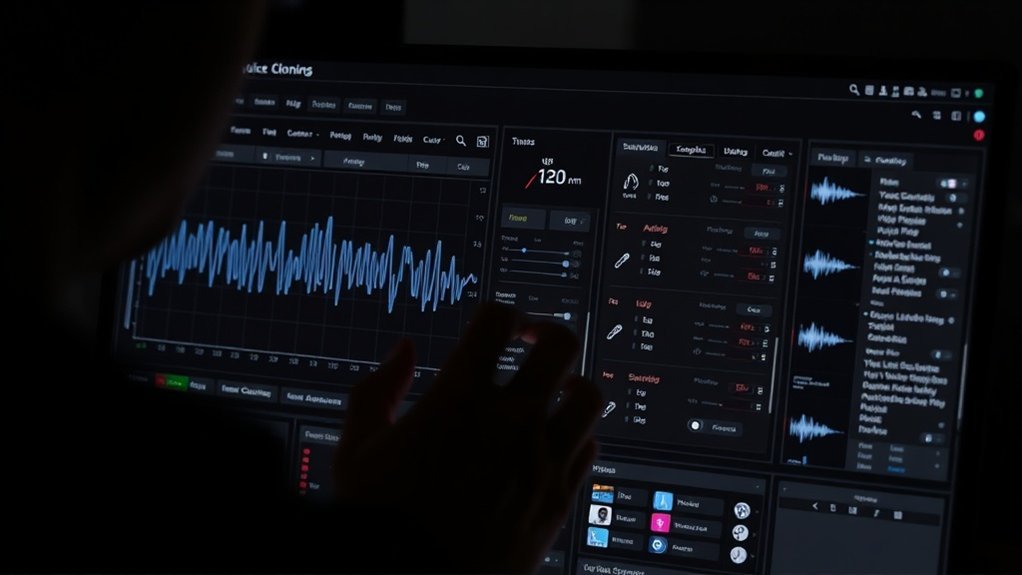
Content creators who master AI voice cloning can access significant efficiency gains and creative flexibility, but they’ll need to navigate potential pitfalls that compromise quality and authenticity.
Success hinges on selecting high-quality source recordings, obtaining proper consent, and maintaining transparent labeling practices that build audience trust.
With those principles established, the real challenge lies ahead: how to implement these strategies effectively while upholding ethical standards and protecting the rights of voice talent.
To maximize the benefits of AI voice cloning technologies like Descript’s Overdub and ElevenLabs while minimizing risks, creators must establish robust ethical and legal frameworks from the outset.
They should implement strict contractual agreements defining approved use cases and compensation structures tailored to specific projects. Watermarking technology, such as that offered by Resemble AI, ensures traceability, thus protecting against unauthorized exploitation of cloned voices.
Clear labeling of synthetic voices fosters audience trust and transparency, a practice crucial for platforms like Synthesia, which allows for AI-generated video content.
Creators should regularly audit their practices against evolving legal standards and industry benchmarks, using tools like Compliance.ai for updates on regulatory changes.
This disciplined approach grants creators control over their AI voice assets while safeguarding voice owners’ rights, ensuring compliance with laws such as the California Consumer Privacy Act (CCPA).
Furthermore, maintaining audience confidence in the authenticity of content requires ongoing human oversight, particularly in contexts where emotional nuance is essential, as AI can’t fully replicate human expression.
To implement these strategies today, creators should start by drafting clear contracts with clients outlining the use of AI voice technologies, invest in watermarking solutions to enhance traceability, and establish a routine for compliance audits using specialized tools.
Voice cloning technologies, such as Descript’s Overdub and iSpeech, can spread rapidly across various platforms, exposing creators to legal and reputational risks if they neglect consent protocols. To protect your interests, implement these essential safeguards:
By maintaining rigorous documentation and transparent practices, creators can build sustainable trust with voice talent. This approach not only respects individual rights but also ensures the long-term viability of AI-driven projects in the voice cloning landscape.
Practical Implementation: Start by drafting consent forms using templates available online, such as those from Rocket Lawyer.
Establish contracts using tools like DocuSign to streamline the process. Regularly review regulatory updates through resources like the International Association of Privacy Professionals (IAPP) to stay compliant.
As the field of AI voice cloning expands, several interconnected areas warrant deeper investigation. For instance, voice actors can explore contractual frameworks that safeguard their rights while enabling innovation, particularly with tools like Respeecher, which allows for high-quality voice replication.
Content creators should examine audio watermarking technologies, such as Audo, which establish ownership and prevent unauthorized replication. Organizations can benefit from studying industry standards, like those set by the Audio Engineering Society (AES), that balance creative freedom with protective measures.
Legal professionals might develop governance structures addressing liability and consent mechanisms, especially in the context of using models like Descript’s Overdub, which allows users to create a digital voice clone with consent.
Technology providers should investigate authentication systems ensuring voices are deployed only in approved contexts, such as using AWS’s Voice ID for speaker verification.
Stakeholders across these domains must collaborate to establish transparent practices, fair compensation models, and accountability measures. This could involve creating standardized contracts for voice cloning services, leveraging tools like Vocaloid for creating unique vocal performances, and ensuring all participants understand the limitations of these technologies.
For example, while Respeecher can replicate voices with high fidelity, it may struggle with emotional nuance, requiring human oversight in creative contexts.
Ethical AI voice cloning isn’t just a trend; it’s the foundation for a respectful and sustainable digital media landscape. Start by ensuring you have explicit consent from voice talents before using their voices. Today, sign up for a tool like Descript or Respeecher, and practice implementing proper labeling and watermarking in your projects. As you adopt these responsible practices, you’ll not only enhance your relationship with your audience but also contribute to a growing industry standard that values autonomy and creativity. Embrace this shift now, and you’ll be at the forefront of a movement that redefines content creation for the better.
When using AI voice cloning, consider obtaining explicit, informed, and revocable consent from voice owners, clearly labeling synthetic voices, and drafting detailed contracts specifying approved uses and compensation. These measures protect voice talent and build audience trust, ensuring responsible and sustainable digital media practices.
Clearly label synthetic voices in your content to enhance transparency and trustworthiness. This informs your audience when they’re hearing AI-generated audio, maintaining authenticity and credibility. Transparent labeling helps build trust and demonstrates your commitment to responsible AI voice cloning practices.
Implement watermarking technology and perform compliance audits quarterly to ensure adherence to privacy regulations like GDPR. Draft detailed contracts specifying approved uses and compensation for cloned voices, preventing misunderstandings and protecting voice talent rights. These measures ensure accountability and maintain the integrity of your content.
Keep human oversight in the production process to correct emotional nuances and mispronunciations. This ensures your final audio resonates authentically with listeners, maintaining the emotional connection and credibility of your content. Human oversight helps refine AI-generated voices, making them more relatable and engaging.
🤖 Editor’s Pick
Editor’s Pick: beginner-friendly guide to ethical AI voice cloning, paired with an intro AI book.
The tools, tutorials, and trends that actually pay — no hype.

The tools, tutorials, and trends that actually pay — no hype.