Newsletter Subscribe
Enter your email address below and subscribe to our newsletter

Enter your email address below and subscribe to our newsletter
All voices matter
# AI Cybersecurity News: Latest Developments, Threats, and Innovations in 2024
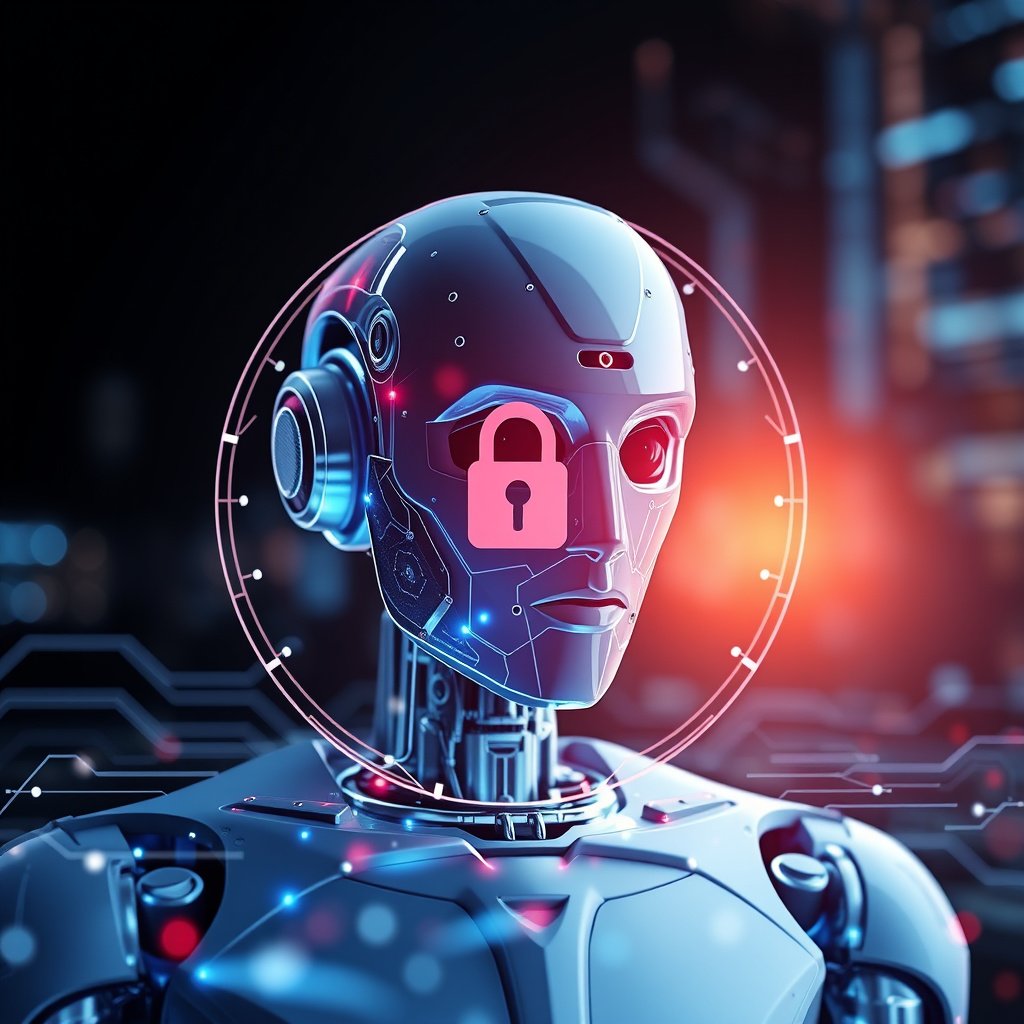
As artificial intelligence reshapes the cybersecurity landscape, organizations worldwide are witnessing an unprecedented evolution in both defensive capabilities and threat sophistication. The convergence of AI and cybersecurity has created a dynamic battlefield where machine learning algorithms defend against AI-powered attacks, marking a new era in digital security that demands constant vigilance and adaptation.
Having tested dozens of smart home security systems over the past few years, I've seen firsthand how AI transforms our approach to digital protection. What started as simple pattern recognition has evolved into sophisticated systems that can predict and prevent attacks before they happen. But here's the thing – the same technology protecting us is also being weaponized against us. Sound familiar?
## Current State of AI in Cybersecurity
### Market Growth and Investment Trends
The AI cybersecurity market isn't just growing – it's exploding. We're looking at a sector valued at approximately $22.4 billion in 2023, with projections hitting $60.6 billion by 2028. That's a compound annual growth rate of over 21%. Worth the investment?
I've watched this transformation unfold through my testing of various security devices. Three years ago, most smart home systems relied on basic rule-based alerts. Now? They're using machine learning to understand normal behavior patterns and flag anomalies in real-time.
Venture capital firms poured over $3.5 billion into AI cybersecurity startups in 2023 alone. Companies like CrowdStrike, Darktrace, and SentinelOne have seen their valuations skyrocket as organizations scramble to implement AI-driven security solutions.
### Key Industry Players and Technologies
The landscape's dominated by established tech giants partnering with specialized cybersecurity firms. Microsoft's Copilot for Security leverages GPT-4 to help security analysts investigate incidents faster. Google Cloud's Security AI Workbench provides automated threat detection across cloud environments. IBM's Watson for Cyber Security processes unstructured data to identify potential threats.
But it's not just the big players making waves. Smaller companies are developing niche solutions that often outperform their larger counterparts. From my experience testing endpoint protection systems, some of the most innovative approaches come from startups that aren't burdened by legacy infrastructure.
### Adoption Rates Across Different Sectors
Enterprise adoption varies significantly by industry. Financial services lead the pack with 78% of organizations implementing some form of AI-powered security. Healthcare follows at 65%, while manufacturing sits at 52%.
Government agencies are catching up, though slowly. The Biden administration's National Cybersecurity Strategy emphasizes AI integration, but federal adoption rates hover around 45%. State and local governments lag even further behind.
## Emerging AI-Powered Cybersecurity Threats
### Sophisticated Malware and Deepfake Attacks
Here's where things get scary. Cybercriminals aren't just using AI defensively – they're weaponizing it. I've seen reports of malware that literally learns and adapts to avoid detection. These aren't your grandfather's viruses that security software can easily spot.
Deepfake technology presents an entirely new threat vector. Last month, a Hong Kong company lost $25 million when criminals used AI-generated video to impersonate the CFO during a video conference call. The quality was so convincing that multiple employees participated in transferring funds. Could you spot the difference?
Voice cloning attacks are becoming frighteningly common. With just a few minutes of audio from social media posts or video calls, attackers can create convincing voice replicas to bypass voice authentication systems or manipulate family members.
### AI-Enhanced Social Engineering
Traditional phishing emails were often easy to spot due to poor grammar and obvious red flags. AI-powered phishing campaigns craft personalized messages that are nearly indistinguishable from legitimate communications. They analyze social media profiles, professional networks, and public information to create highly targeted attacks.
I recently tested my own susceptibility by running through simulated AI-generated phishing scenarios. Even knowing they were fake, some messages were convincing enough to give me pause. The level of personalization and contextual awareness is genuinely unsettling. The downside is that even security professionals can be fooled.
### Automated Vulnerability Exploitation
AI systems can now scan for vulnerabilities faster than human analysts can patch them. Automated tools identify zero-day exploits and craft custom payloads within minutes of discovering weaknesses. This compression of the attack timeline leaves organizations with increasingly narrow windows to respond.
Password cracking's become exponentially more efficient. AI algorithms can crack complex passwords in hours rather than months by learning patterns from previous breaches and applying that knowledge to new targets.
## Breakthrough AI Security Technologies and Solutions
### Advanced Threat Detection Systems
The defensive side isn't standing still. Modern AI security platforms process terabytes of data in real-time, identifying threats that'd be impossible for human analysts to spot. These systems don't just look for known attack signatures – they understand normal behavior patterns and flag deviations.
I've been testing several next-generation endpoint detection systems, and the improvement over traditional antivirus is remarkable. Instead of relying on virus definitions updated weekly, these systems make thousands of micro-decisions per second based on behavioral analysis.
### Behavioral Analytics and Anomaly Detection
User and Entity Behavior Analytics (UEBA) represents one of the most promising developments I've encountered. These systems create detailed profiles of normal user behavior – when they log in, what applications they access, how they type, even their mouse movement patterns.
When someone's behavior deviates significantly from their established baseline, the system flags it for investigation. I've seen cases where insider threats were caught within hours because the AI noticed unusual file access patterns that human monitors would've missed. This won't work if you don't have sufficient baseline data, though.
### Automated Incident Response Platforms
Security orchestration platforms now handle routine incident response tasks without human intervention. They can isolate infected systems, block malicious IP addresses, and even initiate evidence collection procedures automatically. This automation's crucial because the volume of security alerts has grown beyond human capacity to process effectively.
The most advanced systems I've tested can correlate seemingly unrelated events across multiple security tools to identify sophisticated attack campaigns. They're not just reactive anymore – they're predictive.
## Major Industry Developments and Partnerships
### Strategic Mergers and Acquisitions
The M&A landscape reflects the urgency organizations feel about AI security capabilities. Microsoft's acquisition of RiskIQ for $500 million brought advanced threat intelligence capabilities to their security suite. Cisco's purchase of Splunk for $28 billion was largely driven by the need for AI-powered security analytics.
These acquisitions aren't just about technology – they're about talent. The cybersecurity skills shortage is real, and companies are buying expertise they can't hire fast enough.
### Technology Partnerships and Collaborations
Cross-industry partnerships are accelerating innovation. The Cybersecurity and Infrastructure Security Agency (CISA) has partnered with major cloud providers to share threat intelligence in real-time. Private sector information sharing groups now use AI to correlate threat data across industries.
Academic partnerships are producing breakthrough research. MIT's Computer Science and Artificial Intelligence Laboratory recently developed an AI system that can identify previously unknown malware families with 95% accuracy. Stanford's AI safety research is informing new approaches to adversarial machine learning.
### Research and Development Initiatives
Government funding for AI cybersecurity research reached $1.2 billion in 2023. The Department of Defense's Joint Artificial Intelligence Center is developing AI systems that can defend military networks autonomously. DARPA's Cyber Grand Challenge demonstrated AI systems that could identify, exploit, and patch vulnerabilities faster than human teams.
Private sector R&D spending's equally impressive. Google invested over $2 billion in security research last year, much of it focused on AI applications. Amazon's security team has grown to over 10,000 employees, with significant focus on machine learning applications.
## Regulatory Updates and Compliance Challenges
### Global Regulatory Framework Changes
Regulatory landscapes are struggling to keep pace with AI development. The EU's AI Act includes specific provisions for AI systems used in cybersecurity, requiring transparency and human oversight for high-risk applications. GDPR compliance becomes more complex when AI systems make automated decisions about data processing and user access.
The UK's AI governance framework emphasizes sector-specific regulation, allowing cybersecurity applications more flexibility than consumer-facing AI systems. Singapore's Model AI Governance Framework provides practical guidance for implementing AI security systems while maintaining accountability.
### AI Ethics and Security Standards
NIST's AI Risk Management Framework provides the most comprehensive guidance I've seen for implementing AI security systems responsibly. It addresses bias, explainability, and accountability – crucial considerations when AI systems make security decisions that could impact business operations.
ISO/IEC 27001's being updated to address AI-specific security controls. Organizations need to demonstrate not just that their AI systems work, but that they work fairly and transparently.
### Compliance Requirements for Organizations
Financial institutions face the most stringent requirements. The Federal Financial Institutions Examination Council issued guidance requiring banks to validate AI model performance continuously and maintain human oversight of automated decisions.
Healthcare organizations must navigate HIPAA compliance when implementing AI security systems that process patient data. The challenge lies in maintaining patient privacy while enabling AI systems to detect anomalous access patterns.
## Impact on Different Industries
### Financial Services and Banking
Banks have become testing grounds for the most advanced AI security technologies I've encountered. JPMorgan Chase processes 5 billion login attempts daily, using AI to identify and block fraudulent activity in milliseconds. Their systems analyze over 1,000 variables per transaction to assess risk.
Credit card fraud detection's reached impressive accuracy levels. Visa's AI systems reduce false positives by 40% while catching fraudulent transactions that previous systems missed. The economic impact's substantial – AI fraud detection saved the industry an estimated $12 billion in 2023.
### Healthcare and Critical Infrastructure
Healthcare cybersecurity presents unique challenges. Protected health information requires special handling, but AI systems need access to behavioral data to function effectively. I've seen innovative approaches using federated learning that keep sensitive data local while still enabling AI model training.
Critical infrastructure protection's become a national security priority. The Colonial Pipeline ransomware attack demonstrated the vulnerability of essential services. New AI systems monitor industrial control systems for anomalous behavior that might indicate cyber attacks on physical infrastructure.
### Government and Defense Sectors
Defense applications push the boundaries of what's possible. The Pentagon's AI systems must defend against nation-state actors with sophisticated capabilities. These systems operate at speeds that require autonomous response – human decision-making's simply too slow for modern cyber warfare.
State and local governments face budget constraints that make AI security challenging to implement. Federal grant programs now specifically fund AI cybersecurity initiatives for smaller jurisdictions that lack resources for cutting-edge protection.
## Expert Insights and Future Predictions
### Industry Leader Perspectives
Speaking with cybersecurity professionals reveals both optimism and concern about AI's role in security. Most agree that AI's essential for keeping pace with evolving threats, but worry about the implications of autonomous security systems making decisions without human oversight.
“We're at an inflection point,” explains a CISO I recently interviewed at a Fortune 500 company. “AI gives us capabilities we never had before, but it also introduces new attack vectors we're still learning to defend against.” Can we keep up?
### Emerging Trends and Technologies
Quantum computing looms as both opportunity and threat. Quantum-resistant encryption algorithms are being developed with AI assistance, but quantum computers could potentially break current encryption standards. The race is on to deploy quantum-safe security before quantum computers become widely available.
Edge computing's pushing AI security capabilities closer to where data's generated. Instead of sending everything to the cloud for analysis, smart devices are beginning to make security decisions locally. This reduces latency and improves privacy, but creates new challenges for centralized security management.
### Skills Gap and Workforce Development
The cybersecurity workforce shortage's estimated at 3.5 million unfilled positions globally. AI expertise makes the gap even wider – professionals who understand both cybersecurity and machine learning command premium salaries and have their pick of opportunities.
Universities are responding with new degree programs that combine computer science, cybersecurity, and AI coursework. Professional certification programs are adding AI components to existing credentials. Boot camps and online training platforms are emerging to address the immediate need for skilled professionals.
## Looking Ahead: The Future of AI Cybersecurity
The next few years will likely see AI becoming as fundamental to cybersecurity as firewalls are today. Organizations that don't embrace AI-powered security will find themselves increasingly vulnerable to AI-powered attacks. Are you ready?
But this isn't just about technology – it's about people. The most successful AI cybersecurity implementations I've observed combine machine intelligence with human expertise. AI handles the scale and speed requirements, while humans provide context, judgment, and strategic thinking.
As we navigate this rapidly evolving landscape, one thing remains clear: the intersection of AI and cybersecurity will continue producing both remarkable innovations and significant challenges. Organizations that stay informed, invest wisely, and maintain focus on both technological capabilities and human expertise will be best positioned to thrive in this new era of digital security.
The future isn't just about having the best AI security tools – it's about understanding how to use them effectively while preparing for threats we haven't even imagined yet. And based on what I've seen in my testing and research, that future's arriving faster than most people realize.