
Newsletter Subscribe
Enter your email address below and subscribe to our newsletter

Enter your email address below and subscribe to our newsletter
All voices matter
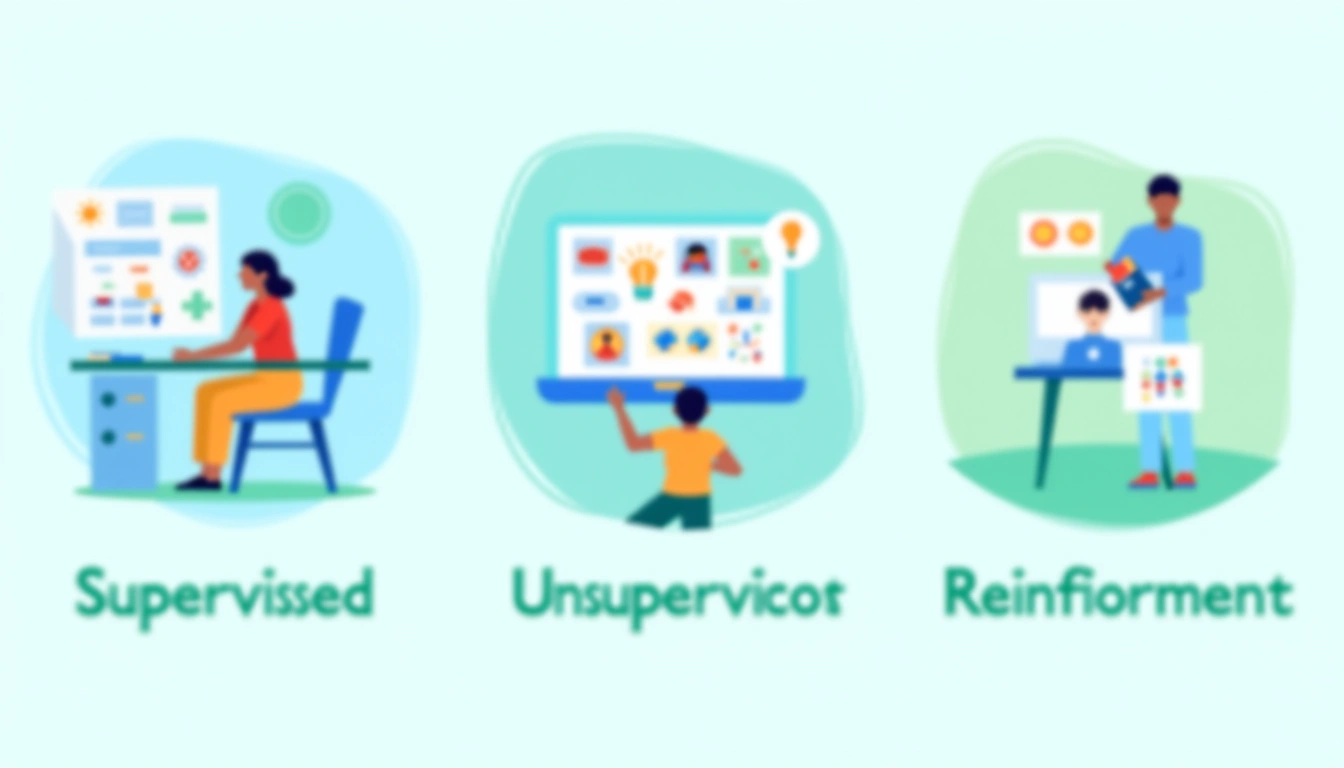
Machine learning doesn't have to be complicated. This beginner-friendly guide explains ML concepts using everyday analogies, real-world examples, and practical steps to get started. No PhD required.
Three years ago, I watched my grandmother accidentally teach her smart TV to recommend Korean dramas. She'd been clicking on them out of curiosity during her afternoon tea, and now her Netflix homepage looked like Seoul's entertainment district. That moment? Pure machine learning in action.
Here's something that'll blow your mind: Every day, you interact with machine learning algorithms about 3,000 times without even realizing it. From your morning smartphone alarm (which learns your sleep patterns) to the route your GPS suggests (analyzing real-time traffic data), ML is quietly orchestrating your digital life.
But here's the thing – most explanations of machine learning sound like they're written by robots for robots. Technical jargon gets thrown around like confetti at a computer science graduation. Today, I'm going to change that.
I've spent the last five years breaking down complex AI concepts for everyone from CEOs to curious teenagers. What I've learned? The best way to understand machine learning isn't through mathematical formulas – it's through stories, analogies, and real examples you can actually relate to.
Think of machine learning as teaching a computer to recognize patterns the same way you learned to recognize your mom's car in a parking lot. You didn't memorize every Honda Civic ever made – you learned specific details about hers. The slightly dented bumper, that small scratch on the driver's side, the way she parks just a little crooked.
Machine learning works similarly. Instead of programming a computer with exact instructions for every possible scenario, we feed it tons of examples and let it figure out the patterns on its own.
Here's a simple definition: Machine learning is a subset of artificial intelligence where computers learn to make predictions or decisions by finding patterns in data, without being explicitly programmed for every specific task.
The key difference between traditional programming and machine learning? In regular programming, you write specific rules: “If temperature is above 75°F, turn on the air conditioning.” With machine learning, you show the system thousands of examples of when people turned on their AC, and it learns to predict when you'll want it on based on temperature, humidity, time of day, and even your daily schedule.
There are three main types of machine learning:
Alright, let's get into the nuts and bolts without drowning in technical speak. I like to explain machine learning using the “Restaurant Recommendation” analogy because honestly, we've all been there – standing on a street corner, scrolling through endless restaurant options, completely overwhelmed.
Imagine you're teaching your best friend how to pick restaurants you'd love. You start by taking them to 50 different places over several months. Some you love, others make you want to order pizza instead. Your friend starts noticing patterns: you prefer places with outdoor seating, you avoid chains, you're willing to wait longer for authentic ethnic food, and you absolutely hate loud music during dinner.
After those 50 experiences, your friend can recommend new restaurants with scary accuracy. They've learned your preferences through examples, not because you handed them a manual titled “How to Pick Restaurants for [Your Name].
Machine learning follows a similar process, but instead of 50 restaurant visits, we're talking about thousands or millions of data points. Here's how it breaks down:
Different algorithms work better for different problems. It's like having different tools in a toolbox – you wouldn't use a hammer to fix a watch, right?
Decision Trees work like a flowchart of yes/no questions. “Is the person over 25? Yes. Do they have a college degree? No. Are they employed full-time? Yes.” Based on the path through these questions, the algorithm makes a prediction.
Neural Networks mimic how our brain processes information, with interconnected nodes that strengthen connections based on successful predictions. These are the powerhouses behind image recognition and language translation.
Linear Regression finds the best line through a scatter plot of data points. It's like trying to draw a straight line that comes closest to touching all the dots on a graph.
Let me share some machine learning applications that are probably affecting your life right now, and a few that might surprise you.
Netflix Recommendations: Beyond just “people who liked X also liked Y,” Netflix analyzes when you pause, rewind, or abandon shows. They even consider the day of the week and time you're watching. Binge-watching on Sunday afternoon? They'll suggest longer series. Quick evening watch? Short documentaries pop up.
Email Spam Filtering: Your email provider isn't just looking for obvious spam words. Modern filters analyze sending patterns, check if the sender's domain has been flagged before, examine image-to-text ratios, and even consider how quickly similar emails are being sent from the same source.
Google Search: Every search you perform helps Google's algorithm learn. It considers your location, search history, the device you're using, and even how quickly you click on results. That's why two people searching for “apple” might get completely different results – one sees fruit nutrition info, another sees iPhone reviews.

Credit Card Security: Every time you swipe your card, algorithms compare the purchase to your typical spending patterns. Buy coffee in New York at 8 AM, then gas in California at 8:30 AM? Red flag. Your bank's ML system caught that impossible timeline and blocked the suspicious transaction.
Crop Monitoring: Farmers are using machine learning to analyze satellite images and predict which fields need attention. The algorithms can spot disease patterns, irrigation issues, and pest infestations before they're visible to the human eye. John Deere tractors now collect soil data and adjust planting patterns automatically.
Package Delivery Optimization: UPS saves 10 million gallons of fuel annually using ML algorithms that plan delivery routes. The system considers traffic patterns, package weights, delivery time windows, and even weather forecasts. Those “delivery between 2-6 PM” windows? Machine learning makes them possible.
Music Creation: Spotify doesn't just recommend songs – it helps create them. Their algorithms analyze successful tracks to identify patterns in tempo, key changes, and structure that tend to keep listeners engaged. Some artists now use ML tools during the songwriting process.
Perfect for understanding real-world applications with practical Python examples.
Medical Diagnosis: Radiologists at Stanford now work alongside ML systems that can identify skin cancer from photos with 91% accuracy – better than most dermatologists. The algorithm was trained on 130,000 images of skin lesions and can spot patterns humans miss.
Climate Prediction: Weather forecasting has improved dramatically thanks to machine learning. The European Centre for Medium-Range Weather Forecasts now provides accurate 5-day predictions that are as reliable as 3-day forecasts were 20 years ago.
Language Translation: Google Translate processes over 150 billion words daily across 109 languages. The neural machine translation system learns not just word-to-word translations, but cultural context and idiomatic expressions.

Here's where most guides lose people. They either assume you're already a programmer or they oversimplify to the point of being useless. I'm going to give you a practical roadmap that actually works.
Before diving into code, figure out what interests you most:
I've seen too many people start with the “wrong” approach for their learning style and give up after two weeks. Match the learning path to your natural interests.
Mathematics (Don't Panic): You need basic statistics, not calculus. Understanding concepts like mean, median, correlation, and probability will take you far. Khan Academy's statistics course is perfect for this.
Programming (Python Recommended): Python dominates machine learning for good reason – it's readable, has excellent libraries, and the community support is incredible. Start with basic Python syntax, then move to pandas for data handling and matplotlib for visualization.
Data Handling: This is where beginners spend most of their time in real projects. Learn to clean messy data, handle missing values, and format information consistently. It's not glamorous, but it's essential.
Start with a simple problem and dataset. I recommend the Titanic survival dataset – it's small, well-documented, and teaches core concepts without overwhelming complexity.
Your goal isn't to build the most accurate model possible. It's to understand the process: loading data, exploring it, choosing features, training a model, and evaluating results.
Free Options:
Paid Resources Worth the Investment:
Beginner-Friendly Platforms:
Essential Python Libraries:
After years of explaining machine learning to people from all backgrounds, I've noticed the same misconceptions pop up repeatedly. Let's tackle the big ones head-on.
This is the big scary headline that gets clicks, but it's not accurate. Yes, ML will automate certain tasks, but history shows us that technology creates new types of jobs while eliminating others.
Look at what's actually happening: Radiologists aren't being replaced by AI – they're using AI tools to review more cases faster and catch things they might miss. Accountants aren't obsolete – they're focusing on strategy and analysis instead of data entry.
The jobs most at risk are repetitive, rule-based tasks. The jobs least at risk involve creativity, complex problem-solving, emotional intelligence, and adaptability.
Absolutely false. You need to understand concepts, not derive equations from scratch. I know successful ML practitioners who couldn't solve a calculus problem to save their lives, but they understand when to use different algorithms and how to interpret results.
Modern ML libraries handle the complex mathematics behind the scenes. Your job is to understand what the algorithms do, not how they do it at the mathematical level.
This drives me nuts. ML is a powerful tool, but sometimes a simple spreadsheet formula solves the problem better. I've seen companies spend months building complex models when basic analytics would've given them the insights they needed.
Ask yourself: Do you actually need predictions, or do you just need to understand what happened? Do you have enough quality data to train a model? Can you solve this with simpler methods first?
Machine learning models reflect the biases in their training data. If you train a hiring algorithm on historical data from a company that primarily hired men, guess what the algorithm will learn to prefer?
Amazon discovered this the hard way when their ML recruiting tool systematically downgraded resumes from women. The algorithm learned from 10 years of hiring data that reflected historical gender bias.
Ethical AI and fairness in machine learning are huge areas of research right now. The algorithms themselves aren't biased, but the data we train them on often is.
Quality beats quantity every time. I'd rather have 1,000 high-quality, properly labeled examples than 100,000 messy, inconsistent data points.
Bad data leads to bad models, period. Garbage in, garbage out – one of the oldest rules in computing still applies to machine learning.
This used to be more true, but the field has made huge strides in “explainable AI.” We now have techniques to understand why models make specific decisions.
Simple algorithms like decision trees are naturally interpretable. Even complex neural networks can be analyzed using attention maps and feature importance scores to understand their decision-making process.
Christopher Bishop's classic provides solid fundamentals at an affordable price point.
Now that you've got the foundations, here are my carefully curated recommendations for taking your machine learning knowledge to the next level. I've personally used or reviewed every resource on this list.
For Beginners:
For Intermediate Learners:
Reddit Communities:
Professional Networks:
Nothing beats learning from practitioners in person. Major conferences include NeurIPS, ICML, and ICLR for cutting-edge research. For more practical content, look for local meetups through:
Learning machine learning without building things is like learning to cook by only reading recipes. Here are projects that'll teach you real skills:
Beginner Projects:
Intermediate Projects:
Machine learning evolves rapidly. Here's how to stay up-to-date without drowning in information:
For basic understanding and simple projects, expect 3-6 months of consistent study (10-15 hours per week). To become job-ready in an ML role typically takes 12-18 months of dedicated learning and practice. The timeline varies significantly based on your programming background and mathematical foundation.
No, deep learning is a subset of machine learning focused on neural networks. Start with traditional ML algorithms like decision trees, linear regression, and clustering. These simpler methods solve many real-world problems and help build intuition before tackling deep learning's complexity.
Python dominates machine learning with libraries like scikit-learn, TensorFlow, and PyTorch. R is excellent for statistics and research. Java and Scala work well for large-scale systems. If you're starting fresh, choose Python – it has the best learning resources and job opportunities.
Absolutely. Many successful ML practitioners come from physics, mathematics, economics, biology, and other fields. Focus on building practical skills through projects and online courses. Your domain expertise in another field can actually be a huge advantage in applying ML to those problems.
AI is the broadest term – any computer system that mimics human intelligence. Machine learning is a subset of AI that learns from data. Deep learning is a subset of ML using neural networks with multiple layers. Think of them as nested circles: AI contains ML, which contains deep learning.
For using existing ML tools, you need basic statistics and probability concepts. Understanding correlation, distributions, and hypothesis testing will take you far. Linear algebra helps with understanding algorithms internally, but isn't required for most practical applications. Calculus is only necessary for advanced research or building new algorithms.
Start with Andrew Ng's Machine Learning Course on Coursera, use Kaggle Learn for hands-on practice, and Google Colab for free computing power. Khan Academy covers the math prerequisites. YouTube channels like 3Blue1Brown provide excellent visual explanations. All of these resources are completely free and high-quality.