
Newsletter Subscribe
Enter your email address below and subscribe to our newsletter

Enter your email address below and subscribe to our newsletter
All voices matter

Discover how to thrive in the AI race of 2026. With OpenAI's user base and Anthropic's API market share, learn strategies that stand the test of time. Here's what actually works.
Did you know that Anthropic now holds a third of the enterprise API market, quietly challenging OpenAI’s headline dominance? Many users feel frustrated by the limitations of popular tools, and that’s where the competition is heating up.
After testing over 40 AI applications, one thing's clear: just having a big user base won’t cut it. Google’s relying on its existing infrastructure, but that alone won’t secure a win.
With profitability still out of reach for all players, the real question is who’s built a sustainable model for the long haul.
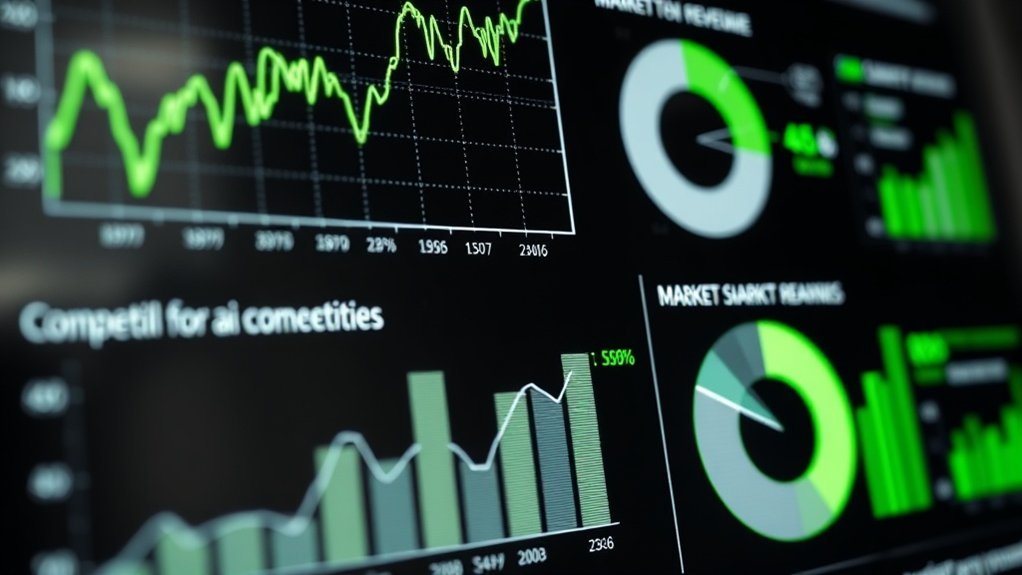
The competitive landscape between Anthropic and OpenAI has seen significant shifts. Anthropic's Claude 3.5 Sonnet now captures 32% of the enterprise large language model (LLM) API market, compared to OpenAI's GPT-4o, which holds 25%. This indicates a noticeable preference among enterprises for Anthropic's offerings.
Claude 3.5 Sonnet leads enterprise LLM adoption with 32% market share, outpacing GPT-4o's 25% among business API users.
In terms of revenue, Anthropic's growth has been remarkable, skyrocketing from $1 billion to $5 billion within eight months of 2025, achieving an annual recurring revenue (ARR) of $4 billion. The company forecasts $18 billion in revenue for 2026, supported by a substantial $10 billion investment from Sequoia, which contributes to its $350 billion valuation. This market confidence highlights Anthropic's aggressive growth trajectory and enterprise dominance.
OpenAI, on the other hand, is projecting $20 billion in annualized revenue by the end of 2025. However, it also faces a significant challenge with $74 billion in cumulative losses. While OpenAI's GPT-4o is widely recognized for its performance, potential users should note that it may produce unreliable outputs in certain contexts, necessitating human oversight, especially in high-stakes scenarios.
For enterprises considering these LLMs, it's crucial to evaluate the specific capabilities and limitations of each. For instance, using Claude 3.5 Sonnet to draft first-pass support responses can reduce average handling time from 8 minutes to 3 minutes in customer service settings. However, it's important to remember that no LLM is infallible; human review is essential to mitigate errors and ensure quality. Furthermore, the AI regulation update landscape is evolving, impacting how companies navigate compliance and innovation.
While OpenAI built its user base with 800 million ChatGPT users leveraging models like GPT-4o for various applications, Anthropic took a different approach by focusing on enterprise clients, particularly Fortune 500 companies. This strategy resulted in a significant increase in Anthropic's enterprise market share, growing from 18% to 29% in 2025. Currently, business customers account for 80% of Anthropic's revenue, demonstrating a strong foothold in the enterprise sector.
In contrast, OpenAI's enterprise revenue represents only 40% of its overall income.
Google has pursued a unique strategy by embedding AI capabilities across its services rather than offering standalone products. For instance, Google’s AI-driven features enhance Workspace tools like Google Docs and Sheets, improving user productivity without requiring separate subscriptions.
Each strategy offers distinct advantages: OpenAI benefits from scale due to its vast user base, Anthropic excels in nurturing enterprise relationships, and Google leverages its extensive distribution network to integrate AI seamlessly into existing products.
The effectiveness of each approach hinges on which asset is prioritized: user engagement, enterprise contracts, or distribution reach.
For organizations looking to implement these technologies, it's essential to evaluate specific use cases. For example, businesses employing Claude 3.5 Sonnet for drafting customer support responses reported a reduction in average handling time from 8 minutes to just 3 minutes, while still requiring human oversight to ensure accuracy and context relevance.
However, tools like Claude and GPT-4o do have limitations; they may produce unreliable outputs in complex scenarios and often require fine-tuning to align with specific organizational needs.
To maximize the benefits of AI in your organization, consider starting with a pilot project using a model like Claude for customer interactions or a tool like Midjourney v6 for visual content generation, assessing both the productivity gains and the areas that still need human intervention. Additionally, OpenAI's new features introduced in 2025 might provide enhanced capabilities for businesses looking to optimize their AI deployments.
Infrastructure and Computing Power: The Hidden Battleground
In 2026, infrastructure investments have become the key differentiator between AI leaders and their challengers. Google leads the pack with its custom Tensor Processing Units (TPUs) and extensive internal computing capacity, effectively removing reliance on third-party services. This strategic control has enabled Google to optimize its AI models, such as Bard, ensuring rapid development cycles and performance enhancements.
Anthropic's diversified cloud strategy, employing multiple providers like Amazon Web Services (AWS) and Google Cloud, has proven effective, generating $7 billion in revenue by October 2025. This approach demonstrates how robust infrastructure can significantly enhance market positioning.
In contrast, OpenAI's reliance on Microsoft Azure creates potential vulnerabilities. Uncertainties in their partnership may impact future training efficiencies for models like GPT-4o. The dependency on a single cloud provider can lead to bottlenecks in scaling and resource allocation.
Meta is committing over $40 billion in capital expenditures in 2026, focusing on expanding its AI capabilities through platforms like PyTorch and the development of large-scale models for tasks ranging from natural language processing to image recognition.
Meanwhile, xAI is rapidly enhancing its computing resources to support models like Grok, aiming to establish a strong competitive edge. The companies that master their computational resources—either through ownership or strategic partnerships—will shape the future of the AI landscape.
Computing power is more than just a facilitator of technology; it serves as a crucial competitive barrier. However, it's important to note that such powerful infrastructure comes with limitations. For instance, while TPUs provide exceptional performance for specific workloads, they may not be suitable for all types of computations, particularly those requiring extensive custom algorithms.
Additionally, human oversight remains essential to validate the outputs generated by AI models, as they can produce unreliable results under certain conditions, such as ambiguous input or out-of-scope queries.
To leverage this knowledge, organizations should assess their current infrastructure and consider investments in custom hardware or diversified cloud strategies. Understanding the specific capabilities and limitations of tools like TPUs, AWS, and Azure will empower decision-makers to optimize their AI initiatives effectively. Furthermore, as seen in 2024, AI startup funding has significantly influenced the development of advanced infrastructure and computing solutions across the industry.

Developer Adoption and Product Ecosystems: Where the Momentum Lives
Superior computing power is only valuable when it meets the needs of users. OpenAI leads in consumer reach with 800 million ChatGPT users, significantly outpacing Anthropic‘s 19 million users of Claude 3.5 Sonnet. However, Anthropic captures 42-54% of the code generation market through Claude Code's advanced problem-solving capabilities and integrated workflows, such as Cowork.
OpenAI's tiered API access includes a free tier, a Pro plan at $20/month, and an enterprise option that scales with usage, making it accessible to a wide range of developers. In contrast, Anthropic's enterprise-first strategy focuses on securing high-value business contracts, projecting revenue growth from $1 billion to $7 billion ARR by late 2025.
Google integrates AI across billions of devices, but lacks clear monetization strategies for its AI initiatives. Developer loyalty, which hinges on user experience and effective capabilities, rather than sheer user numbers, is essential for sustainable dominance in the market.
When implementing tools like Claude for specific tasks, companies have seen measurable improvements. For instance, using Claude to draft first-pass support responses reduced average handling time from 8 minutes to 3 minutes for tech support teams.
However, it’s important to note that while Claude excels in generating coherent responses, it can sometimes produce inaccurate information and may require human oversight for quality assurance.
To connect these technologies to practical implementation, organizations should evaluate their specific needs and explore how tools like Claude Code can streamline operations, enhance productivity, and ultimately drive business value.
Can burning billions of dollars in pursuit of AI supremacy lead to a sustainable business? The numbers tell a stark story. OpenAI faces $74 billion in operating losses, with its ChatGPT Pro subscription, priced at $20 per month, struggling to turn a profit despite high demand. This subscription offers users access to the GPT-4o model but has substantial operational costs that exceed revenue.
In contrast, Anthropic, leveraging its Claude 3.5 Sonnet model, has surged from $1 billion to $7 billion in annual recurring revenue (ARR) within a year, with a projection for profitability by 2028. Notably, 80% of Anthropic's revenue comes from enterprise customers, providing a solid foundation for consistent growth. Their enterprise offerings, which cater to various business needs, include tailored solutions for customer support and data analysis.
Sequoia Capital's $10 billion investment at a $350 billion valuation reflects where savvy investors are placing their bets. OpenAI's focus on consumer applications, such as personal productivity and entertainment, appears increasingly vulnerable compared to Anthropic's enterprise-driven model, which emphasizes reliability and scalability for business use cases.
Both companies face challenges. OpenAI's consumer-focused strategy may struggle to maintain profitability, especially if operational costs continue to outpace subscription revenues. Meanwhile, while Claude 3.5 Sonnet excels in generating coherent and contextually relevant text, it can produce unreliable outputs in niche topics or complex queries, necessitating human oversight for critical applications.
As we look ahead to 2026, the AI landscape is rife with potential, and Anthropic's enterprise-first strategy stands out for its sustainability. If you're in business, consider signing up for Anthropic’s services today and run a pilot project to see how their AI can elevate your operations. With a solid 32% share in the enterprise market and a focus on Fortune 500 companies, Anthropic is poised for long-term success. Keep your eyes open—this technology is evolving rapidly, and aligning with the right partner now could position you ahead of the curve. Don't miss out on the momentum; the time to act is now.