Newsletter Subscribe
Enter your email address below and subscribe to our newsletter

Enter your email address below and subscribe to our newsletter
All voices matter

Transform your presentations with 7 top AI tools that streamline design. Elevate your slides while maintaining your brand voice—here's what actually works.
Did you know the AI presentation tools market is set to skyrocket from $1.5 billion in 2023 to $5 billion by 2031? If you’re struggling to create engaging slides in a sea of options, you’re not alone.
After testing over 40 tools, I’ve found the ones that truly deliver results without compromising your brand’s voice.
Canva, Beautiful.ai, and Microsoft PowerPoint’s AI features help you craft stunning visuals with smart templates and automatic layouts. Let’s explore how to harness these tools effectively and elevate your presentations.
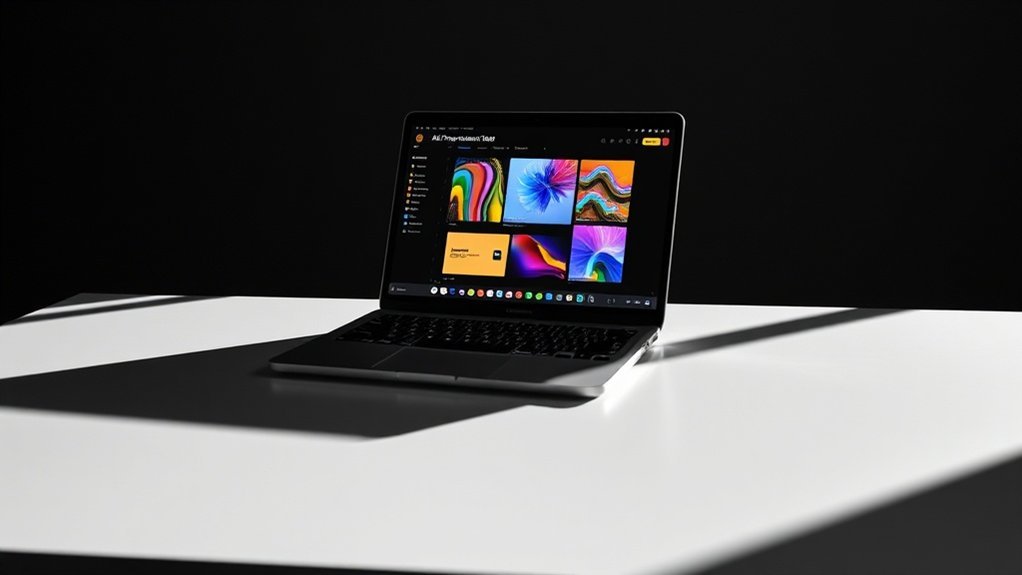
As businesses seek efficient ways to create professional presentations, tools like Canva, Beautiful.ai, and Microsoft PowerPoint’s AI features are reshaping how teams communicate visually. These platforms can reduce design time by up to 40%, allowing users to enhance productivity while retaining creative control.
AI-powered presentation tools like Canva and Beautiful.ai reduce design time by 40%, boosting productivity while preserving creative control.
For instance, Beautiful.ai offers smart templates that adapt to content, ensuring brand consistency and streamlining workflows significantly. Users can generate complete slide outlines from simple prompts in seconds, making it easier to focus on content rather than design. The market for these solutions is projected to grow from $1.5 billion in 2023 to $5 billion by 2031, indicating strong adoption.
Canva Pro, priced at $12.99 per month, provides advanced features like brand kits and collaborative tools, while Beautiful.ai offers a free tier with limited features and a pro tier at $12 per month. Microsoft PowerPoint integrates AI features into its existing framework, enhancing user experience without additional costs.
However, these tools have limitations. For example, while Canva excels in template design, it may struggle with complex animations or custom graphics, requiring human oversight for nuanced design decisions. Similarly, Beautiful.ai’s automated layout can sometimes misinterpret content hierarchy, necessitating manual adjustments.
To implement these tools effectively, start by assessing your team’s specific presentation needs. Explore a free trial of Beautiful.ai or Canva Pro to determine which features best suit your workflow. By leveraging these platforms, you can enhance your presentation creation process while maintaining brand integrity. Additionally, recent trends in AI regulation policies are influencing how these tools evolve to meet compliance standards.
AI presentation tools streamline the process of creating professional presentations, making it easier for anyone to engage their audience effectively.
With these capabilities in mind, consider how they can transform your approach to storytelling and information sharing.
What if you could elevate your content even further by integrating these tools into your workflow?
Presentation tools like Beautiful.ai and Canva’s Magic Write leverage artificial intelligence to automate slide creation, significantly reducing design time and enhancing content quality and organization. These platforms utilize advanced algorithms to generate structured outlines, visuals, and cohesive narratives, streamlining the development process.
For instance, using Beautiful.ai’s smart templates allows users to maintain consistent branding automatically as content changes, eliminating the need for manual adjustments.
Users maintain control over final outputs, benefiting from features like voice narration, data visualization, and real-time collaboration. Beautiful.ai offers a pricing model with a free tier and Pro plans starting at $12 per user per month, which include additional features like custom branding and analytics.
However, these tools have limitations. They may struggle with highly specialized content or produce generic suggestions that require human refinement. Users should be prepared to review and adjust the generated materials to ensure alignment with their specific messaging and branding needs.
By integrating these AI-driven tools into their workflows, professionals can produce engaging, polished presentations more efficiently—cutting design time by up to 40% while ensuring quality standards are met.
To implement this, users can start by signing up for a free trial of Beautiful.ai or Canva and exploring their template libraries to see how they can enhance their presentation processes today.
When examining the distinctive features of tools like Beautiful.ai and Canva, several core elements emerge that differentiate them from traditional presentation software. These platforms empower users to maintain creative control while leveraging automation.
For instance, a marketing team using Beautiful.ai for pitch decks saw their preparation time decrease from four hours to just one hour, demonstrating a tangible benefit.
However, these tools do have limitations. For example, while Beautiful.ai offers great design assistance, it may not support complex animations or custom graphics that some users might need.
Similarly, Canva’s content suggestions can occasionally result in generic phrasing that requires careful review for alignment with brand voice.
To implement these tools effectively, users should start by exploring free tiers—Beautiful.ai offers a basic plan at no cost, while Canva provides a free version with limited features.
As your needs grow, consider their pro plans, which range from $12.99/month to $30/month for advanced functionalities. Users should ensure they understand the specific features and limitations of each pricing tier to choose the best option for their needs.

With a clear understanding of how AI presentation tools streamline the creation process, let’s explore the next phase: the user experience.
How does this technology not only simplify design but also enhance the overall presentation-making journey?
Creating a polished presentation has become remarkably straightforward with specific modern tools like Beautiful.ai and Canva. Users can input their topic, and these platforms generate draft slides instantly.
For instance, Beautiful.ai uses smart templates that automatically adjust layouts to maintain design consistency and align with brand guidelines—eliminating the need for manual formatting. Users retain complete control by editing text and adding custom visuals.
With Canva’s collaborative features, multiple team members can work on a presentation simultaneously, streamlining the workflow. Advanced capabilities such as voiceovers and data visualization tools enhance engagement and polish.
For example, Canva offers a pro tier at $12.95 per month, which includes features like brand kits and premium templates, while the free tier provides basic functionalities.
However, these tools do have limitations. For instance, while Beautiful.ai can generate slides quickly, it may struggle with highly specialized content or nuanced messaging without substantial user input. Additionally, human oversight is still required to ensure the accuracy of the information presented and to fine-tune the overall design.
To implement these tools, start by selecting a platform like Beautiful.ai or Canva, and explore their templates to find one that aligns with your topic. Prepare your content based on specific use cases, and leverage their collaborative features to enhance teamwork in real-time.
The journey begins with a straightforward prompt using tools like GPT-4o. Users detail their presentation’s purpose and content, which GPT-4o swiftly converts into a structured outline and draft slides.
The platform then utilizes Canva’s design capabilities to apply consistent formatting and design elements that align with brand guidelines—eliminating the need for manual adjustments.
Users can refine their content using Grammarly for text enhancement and Tableau for data visualization. They can also access built-in stock images from Unsplash, templates, and smart layouts to customize their slides exactly as needed.
For global audiences, Deepl’s translation capabilities ensure accessibility across languages.
Finally, users can export their finished presentation in various formats, including PDF and PowerPoint, ready for immediate sharing or offline use.
Pricing for these tools varies: GPT-4o offers a free tier with basic functionality, while premium access starts at $20 per month; Canva starts with a free version and offers a Pro tier at $12.99 per month; Grammarly has a free plan, with premium features available at $12 per month; and Tableau offers a free trial, with subscription plans starting at $70 per user per month.
It is important to note that while GPT-4o excels at generating initial content, it may produce inaccuracies or lack contextual understanding, requiring human oversight for final edits.
Similarly, while Canva provides design tools, complex branding elements may still need manual adjustment.
Using these tools effectively means continuously refining content and maintaining a critical eye on the outputs to ensure quality and accuracy.
AI presentation tools matter because they directly address the growing demand for efficiency in professional environments while delivering measurable productivity gains.
Organizations that adopt these solutions experience tangible benefits—from the 40% reduction in design time to presentations created in under a minute—that translate to faster project completion and resource optimization.
The real-world impact extends beyond speed; by maintaining brand consistency and improving content organization, these tools elevate presentation quality while freeing professionals to focus on strategy and messaging rather than formatting. Additionally, automating daily tasks allows teams to dedicate more time to creative and strategic initiatives, enhancing overall effectiveness.
Since time is the most valuable resource in any professional environment, tools like Beautiful.ai and Canva for Teams can reduce design work by up to 40%, significantly enhancing team operations.
These platforms enable users to create professional-quality slides in under a minute, allowing teams to focus on substantive content rather than tedious formatting.
Key advantages include:
These capabilities enable complete control over presentation quality, allowing teams to reclaim valuable time for strategic planning and audience interaction.
Recommended for You
🛒 Ai News Book
As an Amazon Associate we earn from qualifying purchases.
To leverage these tools effectively, start by selecting a template that aligns with your content.
Use Beautiful.ai to create a first draft of your slides, and then refine them in Canva to add branded elements.
This workflow can significantly enhance both the quality and efficiency of your presentations.
Beyond streamlining internal workflows, tools like Canva Pro and Visme are reshaping organizational competition and communication in the marketplace. Companies utilizing these platforms can accelerate content creation and enhance visual storytelling, leading to significant advantages.
For example, teams using Canva Pro can save an estimated 40% of their design time and 25% of overall workflow hours, allowing them to focus more on strategic thinking and creative refinement.
Canva Pro is available at $12.99 per month per user, offering features like brand kits, custom templates, and unlimited folders. Visme, with pricing starting at $15 per month for the Standard plan, provides interactive presentations and infographics.
Both platforms integrate seamlessly with existing software ecosystems, such as Google Workspace and Microsoft Office, minimizing context-switching inefficiencies and helping teams maintain momentum.
However, these tools do have limitations. For instance, while Canva Pro excels at producing visually appealing designs, it may struggle with complex animations or highly specialized graphics, requiring human oversight for nuanced projects.
Additionally, users should be aware that templates might lack originality, leading to similar designs across different companies.
Enhanced audience engagement through AI-generated designs can lead to clearer idea communication, stronger messaging impact, and measurable business outcomes, such as increased conversion rates.
For practical implementation, teams can start by integrating Canva Pro or Visme into their existing workflow, creating a few pilot projects to evaluate effectiveness in their specific context.
| Misconception | Reality | Benefit |
|---|---|---|
| Replaces creativity | Enhances creative process | Maintains originality |
| Lacks depth | Conducts thorough research | Well-rounded content |
| Tech-only tool | Intuitive for all users | Wider accessibility |
| Generic output | Highly customizable | Brand control |
For example, using Canva Pro (priced at $12.99/month), users can access premium templates and features that streamline design processes, ultimately saving up to 40% in design time. This boosts productivity without sacrificing quality or control.
To effectively use these tools, start by identifying your specific needs—whether it’s for a corporate presentation or a marketing pitch. Familiarize yourself with the features of your chosen platform, such as Canva’s drag-and-drop interface or Visme’s interactive elements. Create a few drafts, and solicit feedback to refine your presentation further. This hands-on approach will help you leverage the capabilities of these tools while ensuring your unique voice shines through. Additionally, understanding the basics of artificial intelligence can further enhance how you utilize these tools effectively.

Mastering AI presentation tools not only boosts efficiency but also sets the stage for a deeper exploration of effective strategies.
So what happens when you implement these tips? By avoiding pitfalls like excessive reliance on AI-generated content and tailoring designs to your audience, you pave the way for more authentic and impactful presentations.
With this solid groundwork, let’s look at how integrating smart analytics can elevate your presentations even further.
To unlock the full potential of specific AI presentation tools like Microsoft PowerPoint with Copilot or Beautiful.ai, start with clear, detailed prompts that guide the model toward generating relevant content quickly. For instance, using Copilot to draft an agenda can streamline the initial setup of your presentation.
Leverage built-in templates and smart layouts, such as those found in Beautiful.ai, to maintain consistency and enhance visual appeal without tedious formatting. These platforms automatically adjust elements to fit your content, reducing manual effort.
AI text refinement capabilities, like those in Jasper AI, allow users to summarize or expand content effectively, improving clarity and engagement. For example, summarizing a lengthy report into key bullet points can help keep your audience focused.
Testing various export formats is crucial; both Microsoft PowerPoint and Google Slides offer export options like PDF and PPTX, ensuring presentations reach audiences in their preferred medium. This versatility can be particularly beneficial for educational institutions or corporate environments where format preferences vary.
Additionally, reviewing user feedback and testimonials can reveal practical use cases. For instance, users of Canva for Teams have reported that using collaborative features reduced their design time by 50%.
However, it’s essential to understand the limitations of these tools. While Copilot can assist with content generation, it may not always grasp nuanced context, necessitating human oversight for final edits.
Furthermore, tools like Jasper AI have usage limits on their free tiers, typically allowing for a limited number of words generated per month, with pro plans starting at around $29 for more extensive needs.
While leveraging specific AI presentation tools like Canva for design or Beautiful.ai for smart slide layouts can establish a strong foundation, many creators still face challenges when executing their presentations.
To maintain control over your slides and enhance your delivery, follow these essential practices:
These guidelines help prevent common missteps that can undermine otherwise strong content.
The rapid evolution of AI presentation tools like Beautiful.ai and Canva’s Magic Write opens several compelling avenues worth investigating. Users seeking a deeper understanding might explore how Beautiful.ai’s design automation maintains brand consistency while reducing manual intervention, enabling teams to create visually appealing presentations efficiently.
Investigating content generation capabilities with tools such as GPT-4o reveals how these platforms shift focus from mere formatting to strategic messaging. For instance, a marketing team using GPT-4o to draft presentation content saw a reduction in time spent on initial drafts from 6 hours to 2 hours.
Understanding the market’s explosive growth—from $1.5 billion to a projected $5 billion by 2031—demonstrates industry confidence in these solutions. This growth is underscored by user adoption rates, with platforms like Canva reporting over 100 million monthly active users.
Examining efficiency metrics, such as the 40-80% time savings reported by users of Beautiful.ai, helps stakeholders evaluate ROI potential. For example, a sales team noted that using Beautiful.ai reduced their presentation preparation time significantly, allowing them to focus more on client engagement.
Finally, analyzing advanced visual enhancement features in tools like Midjourney v6 empowers decision-makers to select solutions that align with their specific organizational needs and performance objectives. However, it’s important to note that while Midjourney excels at creating high-quality images, it requires careful prompt engineering to avoid irrelevant outputs. Users must remain vigilant about the need for human oversight in areas like ethical image generation and content accuracy.
For practical implementation, teams can start by integrating these tools into their existing workflows, assessing the specific features that meet their needs, and monitoring KPIs to measure improvements in efficiency and effectiveness.
Embracing AI presentation tools is no longer optional; it’s a game-changer for anyone looking to elevate their slide design. Start by signing up for Canva’s free tier and create your first presentation this week using their AI design features. With these tools, you won’t just enhance your visual storytelling—you’ll streamline your workflow and boost your professional edge. As AI continues to advance, those who adapt quickly will lead the way in innovative communication. Don’t wait; the future of presentations is here, and it’s time to make it work for you.
Related: Ai Tool: 15 AI Tools That Generate Revenue While You Sleep
Related: Ai Tool: New AI Tools Worth Trying in 2026: The Ones That Aren’t Overhyped
Top tools include Canva, Beautiful.ai, and Microsoft PowerPoint’s AI features. They offer smart templates, automatic layouts, and reduce design time by 40% while maintaining brand consistency.
AI tools cut design time by up to 40%, boosting productivity by 80%. Features like auto-generated slide outlines and adaptive templates streamline workflows significantly.
Premium plans range from $12 to $12.99/month. Most platforms offer free trials, allowing users to test features before committing to tiered subscription models.
Smart templates adapt to your content, applying consistent fonts, colors, and layouts. Tools like Beautiful.ai automatically align designs to brand guidelines, reducing manual adjustments.
🤖 Editor's Pick
Editor's Pick: A digital whiteboard tablet for sketching AI slides. Perfect for ai for beginners exploring ai books.
The tools, tutorials, and trends that actually pay — no hype.

The tools, tutorials, and trends that actually pay — no hype.